Tuesday, December 1, 2015

African Safari: Planning Phase

In late 2014, when I made the decision to go on safari, I knew that I'd need at least two years to save and plan everything.  Apart from the fact that I'd need at least a month on the ground just to scratch the surface in South Africa, Botswana, Namibia, and Zimbabwe, it's hugely expensive.  As always, time and money tend to have an inverse relationship as you progress.  The more time you have, the less it potentially costs... up to the point where you've dragged out your transportation to a full year and have now also added 365 nights of accomodation to the tab.  Well, I didn't have a year.  Or, if I did, the net result would also be that I did not have a job.  And, as I'm quite partial to money, a month it was!

I considered, briefly, that I might just visit South Africa.  Johannesburg to Kruger and back, and then a week in Cape Town.  Maybe splurge on a flight to Victoria Falls for a weekend, if I had the funds.  Or, I could have attempted a single week in Tanzania and Kenya; not during the migration, but still -- a week in what is arguably the best safari preserve in the world was approximately equal to 3 weeks in and around South Africa.  But as I planned, my list got longer and longer... I wanted to see more animals, for one; and I wanted to experience more than the big parks and largest cities in that part of the continent.

The obvious answer was to fly into my destinations, which is what many with deep pockets do.  There are scores of small air strips both in the field and in the neighboring towns to support short-flight tourism, and the tickets are actually pretty reasonable.  But a reasonable flight is still not a cheap commodity, and I didn't want to beggar myself to save what amounted to 3 days.

So, instead, I turned my idea toward booking an overland tour.  Normally, when I travel in South and Central America, I can move relatively easily and affordably on public or chartered transit.  A bus seat from La Paz to Rurrenabaque cost a whopping USD $20, even if it did take nearly 2 days.  But the options I was able to research in South Africa and Botswana were significantly more limiting.  Schedules were irregular, seats were pricey, and stops were frequent.  When you have to travel overland on a crowded bus for 2 days, you'd at least like it to be the same vehicle the whole way.  Lots of changes makes it quite stressful.

Overlanding and camping, I managed a budget and a time-table that worked for me.  The overland option priced lower than renting a car to self-drive (barely), but it really won out because we were able to rent out the equipment we needed.  Tents, bedrolls, and cooking equipment are all bulky and not something I particularly wanted to purchase on the ground when we arrived.  There are any number of overlanding companies online, but we chose Nomad.  Their trucks are rugged, their gear is reliable, and they had departure dates that we liked.  It was just that simple.

Looking back, I can say that overlanding was a bit too much like chartering a tour for my tastes. We also had a couple of long drives, in excess of 12 hours, which gets tedious fast.  It might have been worth the effort to do less, but on our own terms.  However, camping was exactly the right choice.  We had so many amazing experiences around the camp fire -- spotting glowing eyes in the bush, listening to predators prowling beyond the fence, watching Scorpio and the Southern Cross circle high overhead.  We even introduced our camp-mates to s'mores culture, which we had to toast on the wrong end of a serving spoon.

For me, it was heaven.  Oh, early mornings and strange nights punctuated by disasterous toilets and cold showers -- that's true.  But also building up a fire to cook over the coals (commercial charcoal being uncommon or even unheard of), unplugging and sipping Pinotage on a camp stool, watching monkeys fight for marula nuts in the trees above, sipping red tea and nibbling on biscuits at sunrise on the waterfront.  It was the best choice we possibly could have made.  So, as this blog moves (belatedly) into 2016, I just want to record the full weight of the undertaking.  I'm sure to focus more on the sights, animals, and experiences, but getting there was an experience worth remembering in and of itself.

Friday, February 6, 2015

Cozumel & The Coral Reefs of Mexico

Well, I've accepted by this point that an annual vacation with my mother is the wage of returning home only for Christmas and Thanksgiving.  And, given how well we get on (which is to say: in short bursts), we've decided that a cruise is the best middle ground.  It's affordable, convenient, and boozy.  Someone else does all the housekeeping and cooking; we can sip cocktails and read all day; we can dip our toes in the sea.  So, it was with some trepidation that I added my father to the mix this year.  He's good company, but I don't think we'll be doing that again.

I shall spare you the doldrums of a floating hotel and instead focus on the one thing about this trip that was a little bit unique: we got to spend a couple of days in Cozumel!

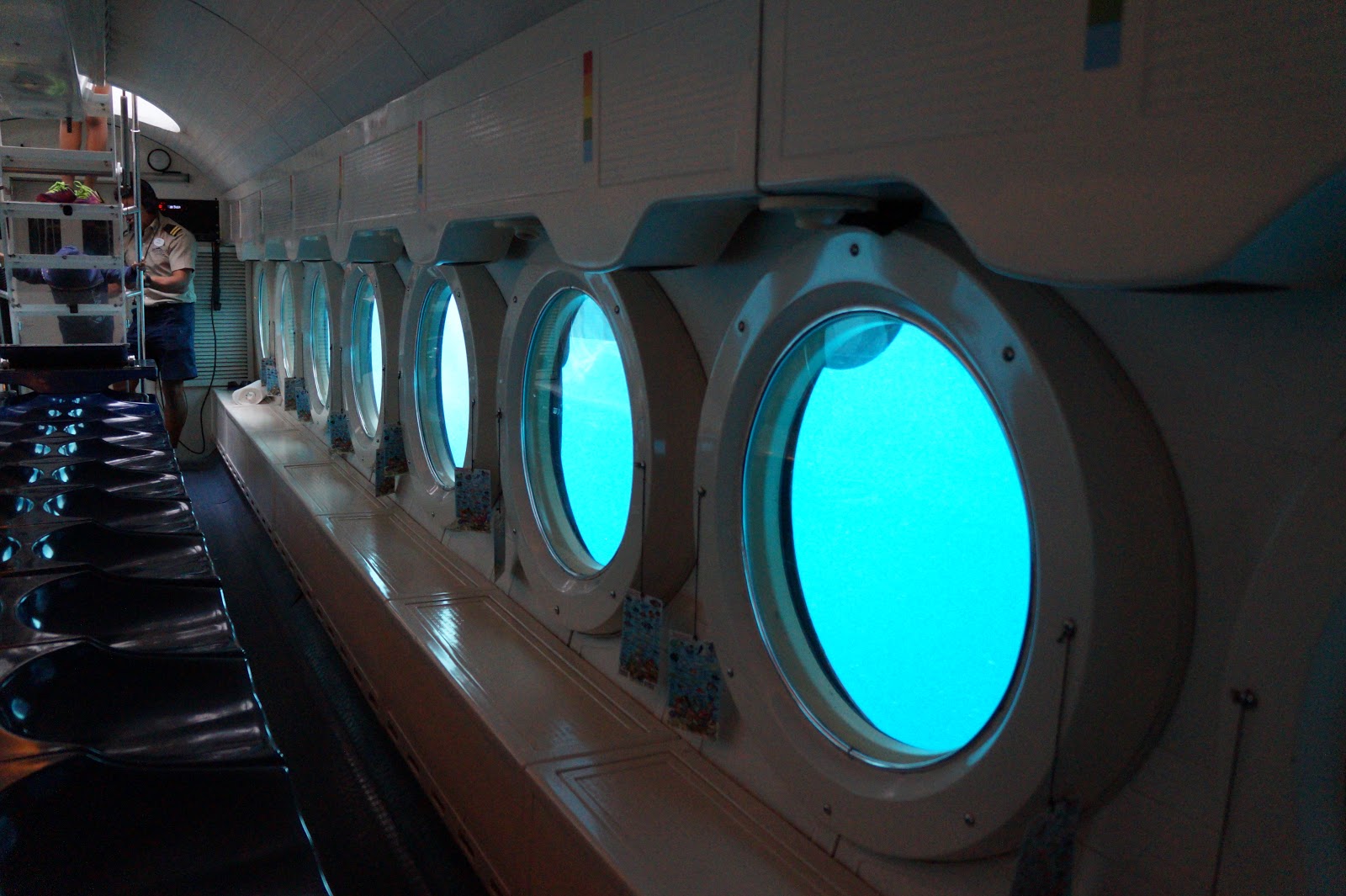
Anyone who's met me knows that I am completely disgusted by fish.  I mean... God, why? The eyes alone, yeesh.  But, at my father's invitation, I spent part of a day with him on a tour of the Cozumel Reef.  It is the same reef that runs all the way south toward Belize, and offers some of the best scuba, snorkel, and biodiversity of any marine habitat anwhere in the world -- second only, perhaps, to the Great Barrier Reef in Australia.  So, suffice to say, we booked a submarine.

It was just about as uncomfortable as a day at the aquarium, but hey -- I drank a lot of tequila and took some photos.  A unique experience.


Friday, November 21, 2014

Antigua Guatemala - Adios!

And so, bathed in the stank of a thousand hemp products and unwashed dredlocks, I returned to Antigua.  I'm sad to say, I didn't stray far from the city center.  The old cobbles and Spanish architecture with is cracking veneer of ruin embodies the beauty and terror of colonization.  Whatever blood was shed to build it (and by all accounts, it was a lot), Antigua is a haunting town full of history, and well worth seeing.

In many ways, it's like stepping into a time machine, and I rather suspect that the tourism boar are heavily invested in keeping it that way.  I will end this long-overdue blog entry with a few photos, and simply reaffirm that this was a trip that took me entirely by surprise, in the best possible way.


Wednesday, November 19, 2014

Lago Atitlán & Panajachel


After a brief over-night in Antigua, which served as more of a way-station than a an actual destination at that moment, I got up early and boarded a Chicken Bus for Panajachel.  Pana, the largest city on the rim of Lago Atitlán, is the traditional stopping-place for visits to the highland lake.  Luckily for me, I had budgeted several days to spend in the area, so I got to see a lot more than the Pana Santander High Street and bus terminal.   From the main bus drop-off, it's a short walk down to the lancha, where a fleet of bulky, fiberglass boats that strongly resemble bathtubs wait to ferry passengers to the neighboring towns.


Perhaps, on a re-do, I would sacrifice some of my time in Pana and spend a little more time in Honduras instead.  But not much of it!  To start with, the lake is beautiful.  The clear waters reflect the sky, turning the entire lake a deep sapphire color, and a ring of volcanoes surround the site.  It's genuinely one of, if not the most, beautiful place in the country.  And this from the girl who was loath to leave Rio Dulce.

The view from the lancha alone was worth a visit, but actually getting out onto open water was a spectacular (and very wet) experience.  Pro Tip: Don't bring anything you haven't waterproofed or that can't afford to have soaked onto the boat.  Sleek, ergonomic vessels these are not; they kick up tremendous wake, mostly into the laps of the passengers.  Zip-locked electronics are a must.

From Pana, I headed directly to San Pedros, the back-packer capitol of Guatemala (or possibly second to Antigua).  It's the kind of place that any one in the mood for a bowl of weed and a mountain of banana bread at the beach would enjoy.  Personally, I kayaked.  A lot.  Rentals were very cheap, and there wasn't much else to do that didn't involve consumption of some sort.  The food on offer in town was decent, and it was a nice chance to change my diet from more traditional Guatemalan fare to a special treat -- an Israeli restaurant attached to my hostel.  Definitely don't visit San Pedros if you can't deal with stinky travelers and lots of parties, though.

Just across the lake from San Pedros is San Marcos, a laid-back hippie town full of aging ex-pats and massage parlors.  It's much quieter than its neighbor, and if you were looking for a truly restful time, this would be my recommendation.  I passed a lovely afternoon reading on the pier, walking through its twisting, overgrown alleys, and checking out the many murals.  Ultimately, I returned to San Pedros well rested and ready for another night out.

The somewhat interesting thing I found in San Pedros, that wasn't true in many of the other places I visited in Guatemala, was that it was the only destination for many of the travelers I met there.  Out and about, I would predominantly meet European and American gringos who were visiting the sites: Tikal, Rio Dulce, Antigua... all were common.  Some were going on down / up the trail a little further than others, but ultimately they were trying to live the dream: see the world cheaply, independently, and not from the pool-side bar at a resort.  Some even mentioned plans to visit the Lago.  But in San Pedros, it seems like people more or less got off the plane, hired a shuttle, and went straight there.  I guess I'm used to weed tourism in some capacity, but I didn't realize that I was walking into its Mecca.  The El Dorado of Pot.

Deciding that my time in San Pedros was over, I returned to Pana and holed-up there in a small hostel with a beautiful courtyard.  Pana has a lot to offer, and a fairly broad appeal for tourists.  I'm not sure that the very-elite snobs of the backpacking world would like its middle-class tourist vibe much, apart from using it as a base to climb the near-by volcanoes, but it's definitely a good stop if you're travelling with family or just want to slow down for a few days without all the fuss of the lanchas.

I visited the museum, took a walk through the Atitlán Nature Reserve, and enjoyed lots of live music on the Santander.  Then, on a Thursday, I boarded a Chicken Bus for the market at Chichicastenango.  Chichi is famously one of the largest markets in Central America, and definitely the biggest one in Guatemala.  What I expected was to find something like the infamous Black Market in Bolivia, mixed with elements of the Mercado Central in Peru.  Or, maybe on a stretch, something semi-permanent, like the Istanbul Grand Bazar.  What I found was infinitely more crowded, and ultimately exhausting.  But I got my Christmas shopping done for under $300, so I guess I'm not complaining.

Chichi is a labyrinth of streets and alleys, crowded on both sides with vendors whose wares sit on tarps on the ground.  A few fortunates had card tables, but most simply piled up goods (including caged animals) so high that they came up to browsing level anyhow.  The closer I got to the central plaza, outside the Cathedral, the more likely I was to encounter tourist goods.  Dozens of blanket sellers, jade sellers, and kiosks full of kitsch crammed together in the plaza under loose scaffolding.  If you saw one of each booth, you realistically saw them all.  The uniqueness of individual sellers was fairly non-existent, but a few blocks further out I found some actually interesting textiles and embroidery made by the women who were selling them, instead of what I presume was a big machine from China.

I simply didn't have a full day of shopping in me by the time I had walked half of the crowded market on my initial browse, so I looped back for the 1 or 2 items that I really wanted, bought a few blankets for gifts, and boarded the Chicken Bus back to Panajachel -- where a shady hamock in a private garden awaited me.

With the bulky gifts bought and my vacation time winding down, I really only had one last stop on my agenda before flying back home: Antigua.  I caught a bus back to the historic capitol of Guatemala the next morning, fully intending to see more than the back of my eyelids this time around.


Friday, November 14, 2014

Honduras: Copan Ruinas

Thanks to my early booking, I managed to snag a morning bus out of Puerto Barrios, and onward to the Honduran border!  The best bit of travel advice I have for anyone who intends to follow this route in the future is to book your departure at least 2-3 days ahead of time.  Otherwise, it's likely that you'll have to navigate a series of Chicken Buses, combis, lanchas, and tuk-tuks to get where you're going. And while I'll admit that that sort of travel is how adventures are made... you won't do yourself any favors if you've got a schedule to maintain (which you will if you're getting by on a paltry 3 weeks of vacation per year).

I found the border crossing into Honduras to be relatively painless, but I'd definitely suggest picking up an extra roll of toilet paper before you attempt the journey.  Most backpackers are always prepared for this eventuality, but I'm here to confirm: the toilets in the Honduran crossing station have TP rollers only as a distant memory.  I changed some money at the crossing, with mixed results.  The rates were OK.  But the Honduran Lempira is so de-valued compared to the USD or even the Guatemalan Quetzale that even a poor exchange of around $40 is going to keep you afloat for a few days.  Hell, I almost ended up using some of it as toilet paper before I found my emergency wet wipes.  It's also a very real possibility that the ATMs (there are about 2) in Copan Ruinas will be out of cash over the weekend, and won't stock up again until Monday.  Most businesses will take USD in a pinch, but unless it's a weekday, don't plan on withdrawing cash once you cross into Copan proper.

From the border, it's a very short combi ride to the town of Copan Ruinas -- but beware! The vans don't leave until they're full (a common, but annoying, practice that most travellers are aware of).  In this context, at a slow time of day, that can mean waiting more than an hour for other passengers to turn up.  Once I got into the town, I navigated my way out from the Central Plaza and found a hostel about 2 blocks away: Don Moises.  The rates were great, the accomodations were clean, and the water was hot.  Plus, they had a large balcony with hammocks.  Honestly, you've got to be prepared to navigate the hazards of electric shower nozzle water heaters throughout Centeral America, but Don Moises' were the least zappy... so they get an honorable mention for that.

Copan was once a major Mayan center, but it collapsed on itself -- archaeologists tell us -- because the huge volume of people and agricultural advancement led to extreme erosion of the jungle soil over steep, mountainous terrain.  The same thing is happening to Copan today, during its tourism renaissance, and it's easy to see where mudslides have come over roads if it's been raining.  But apart from that, it's a quite nice town with a busy street market.  There are all the usual goods, the token chicken-and-corn stalls, and one special feature that I didn't find in Guatemala: lychee berries.  The locals sell produce out of small shopfronts and pickup trucks, and you can buy a bag full of lychees for around $2 USD (and I assume this is the hose-the-tourist price).  I spent my down-time lounging in a hammock, drinking a licuada (smoothie -- banana and peanut, for preference), and reading Prattchett.

Then, before sunrise on my second day, the real highlight began.  Copan Ruinas, as the title implies, houses some of the finest Mayan ruins remaining today.  Though not the largest complex, or built on the scale of the Tikal pyramids, the carvings, stellae, and palaces are in excellent condition.  The jungle has been cut back to reveal intricate statues with beautiful and distinctive Mayan writing, and the foundations of massive homes, sports arenas, and tombs are scattered around the park.


The Copan Archaeological Site gets a 10/10 from me.  Keen visitors should arrive a day ahead of time, rise early, and take a tuk-tuk up the road about half an hour before the park opens.  Anyone with even passing Spanish should be on good terms with the cleaning ladies in about 5 minutes, and into the park twenty minutes before anybody else even shows up.  Having a space like that to yourself, in the cool of the morning... perfection.  My only real regret on this trip was not making time to see more of the surrounding sites in Honduras; I'm planning on going back some day.

They also have great trails out to some of the more remote sites, and there's very good bird watching.  I saw what I think was a Quetzal, about 10 different colored parrots, and heard more interesting chirping than I could even begin to identify.  Then we have the flora.  Some of the plants were wild.  I never expected that I'd be interested in visiting the rainforest; I've done the end of the Amazon that interests me, the pampas, and the rest seems buggy, muggy, and dense -- unless you're the sort of person who likes canopy walks and zip-lines (AKA not me).  But just walking through the underbrush in the Honduran jungle was a fabulous experience -- so I might revise my opinion on visiting central Brazil one of these days.

In fact, I liked it so much that I visited a botanical center that evening.  Just outside of town, Macaw Mountain functions as a bird sanctuary and finca, but the real treasure is their garden. They highlight local plants with small signs, and showcase the more exotic-looking flowers alongside some of the common growths I'd been seeing around the countryside.  The only moderately inconvenient thing were the transport options -- I had to walk about half way back to the town before I found another tuk-tuk.  But it was a nice walk, over paved roads, and all around a nice way to finish the day.  Definitely plan at least 2-3 hours if you're visiting.

By the time day 3 rolled around, I was sad to say goodbye.  But I was bound for Antigua, in a touristy shuttle-van, which -- though slightly more expensive than a coach bus ticket -- made shorter work of the 8-10 hour journey, and was the most direct solution for my scheduling options.


Wednesday, November 12, 2014

Rio Dulce & Livingston: Sweet & Sour

Leaving Flores and St. Elena is not challenging; the St. Elena bus station can get you just about anywhere in the country, or beyond.  Guatemala City and Antigua also have really great connections.  However, if you're going to do a short stay Rio Dulce, I have to advise that you book your next connection immediately on arrival... unless you're planning to stay for a week or more.  Arriving buses in Rio Dulce drop their passengers off in Puerto Barrios, near the bridge (one of the largest in Central America) and ferry pick-up for Livingston.  Lago Izabal defines the region, and a massive market leads back through the harbor -- a favorite among ex-pat sailors and yachters during hurricane season.  In other words, there are lots of travelers coming in via road and water, and only a certain number of seats on the buses.  I booked my next leg, toward El Floridio and the Honduran border, and still found that the bus (again, not a Chicken Bus) was over-booked to standing room only.  However, many of the travellers were locals, and they got off at numerous villages on the way.  By the time we hit the border, I was the only one left... but that's a story for another day.

Arriving early in Puerto Barrios, I decided to push on to Livingston at the first opportunity. I had a few hours to kill, so I grabbed a Caribbean cocktail at one of the local bars, where I'm pleased to say they had live music playing at 8 o'clock in the morning.  Not too shabby! Then I hopped on board the 9:30 lancha (ferry) for the coast.  Livingston, a town on the Carribean accessible only by water, boasts a colorful Garifuna culture that makes it unique among Guatemala's more traditionally Mayan background.  The Garifuna are the descendants of African slaves whose transport ship crashed off the coast; their cultures mixed with the Mayans, and the area remains a largely blended culture to this day.  Of course, that also means that it's marketed to tourists as a one-of-a-kind stop on the way downt he Gringo Trail.

Well, I'm here to tell you: they may know how to party in Livingston, but that town is NASTY.  The beaches are filthy, the streets are full of garbage, and the local digs are both disgusting and expensive.  I'm sure that there are nicer places to stay than the one I found, but I just wasn't willing to spend more than $20 on a dormitory bed in Guatemala's biggest tourist trap. Yes, trap.  There are 2 lanchas in and out each day; other than that, you're S.O.L.

I got to try their most famous food, the seafood stew known as Tapado, and drink their trademark beverage, the Coco Loco, a coconut filled with rum.  I'm not sure what else was in there, actually.  Tasted just like coconut water and about 4 shots of liquor.  I also tried what the locals referred to as a "stronger" drink (though I'm not sure how much stronger than basically pure rum we're going to get) called Garifuti -- which is either distilled or infused right in the community. Either way, it tastes like a Pisco took a piss in a Vodka bottle, but at least it's unique.

 The Tapado was OK, but I think I could have just as easily skipped spending the night and popped by for a quick lunch.  There are a few famous sites in the area, namely the fishing beaches and the small series of waterfalls in the nearby jungle, but neither of these really impressed me.

Still, it's worth a ride if only for the lancha voyage down the Rio Dulce.  You'll pass through lily-pad encrusted lagoons, be shamelessly paraded past canoe markets that -- at a bare minimum -- seem to support the local culture, get a good look at El Castillo, and pass through a small canyon with pale, white cliffs.  There's also a stop along the way at a small hot spring and bar that is definitely worth a visit -- as long as you're in the mood for a soak and a drink sometime between 10AM and noon.

Once I got out of Livingston, I grabbed a bunk at the quintessential Rio Dulce hang-out, Hotel Backpackers, and simply enjoyed a day of luxuriating in the sun.  They have a waterfront bar and dock that allows for an excellent view of the passing vessels, and it's easy to flag down a lancha or rent a kayak if you want to get out and explore.  In retrospect, I really wish I'd taken both of my Rio Dulce days to simply relax over a good Discworld novel and some Gallo on the Sweet River.  It was definiely a trip highlight.


Monday, November 10, 2014

Flores & Tikal: Jungle Pyramids

I learned a lot on my trip to Tikal, not all of hit historical or archaeological. For example, I learned that the ATM is called the Cajero.  I learned that potholes are not just for roads, but also for sidewalks. I learned that the logic behind decisions like: "Just take the night bus and skip spending money on a hostel that night; you'll save some money and make better time" is the sort of nonsense best left to travelling 19 year-olds.  It worked for me in Bolivia.  Less so in Guatemala.  I also learned that the Guatemalan people are beautifully indulgent of their children.  Babies cry.  In the States, it's cause for embarassment when your screaming kid keeps an entire bus full of people up all night.  Not that there's anything an American parent can do for their child that a Guatemalan parent can't.  But that's exactly my point -- the parents tried, failed, and it was OK.  They got support from the people around them.  Nobody threw a fit or made a scene.  There's something about children throwing tantrums that tends to translate to adults throwing tantrums in the USA; not so in Guatemala.  The people (excluding myself, because I REALLY wanted to sleep) were amazingly patient, and took turns holding the baby.

My overnight bus to St. Elena & Flores (two sister cities, one on an island and the other on the banks of Lago Peten Itza), the gateways to Tikal, took me via Belize.  We all got off the bus at the border, a few other passengers got on, and we looped back into Guatemala, where I was dropped off at around 4:30 AM.  Blessedly, my restless night was not spent aboard a Chicken Bus (more on that later), so it was at least a reasonably comfortable night.  The Touts at the station wanted to immediately sell me on a ticket for an early-morning trip to Tikal, but I had given myself a bit of time and planned to camp overnight in the jungle; so I wasn't in any rush.

I grabbed a nap at a real hole-in-the-wall hostel (so much for saving money), and then grabbed a sunrise breakfast of Juevos Rancheros overlooking the Lago.  It almost made up for the bus ride.  I had a bit of time to walk through Flores, and I got to enjoy all that this terracotta-tiled tourist trap had to offer.  Quaint cobbled streets, narrow alleys, tightly-packed homes, and passels of short, stout Guatemalan ladies selling everything from live chickens to Tide laundry detergent.  But the highlight - by a long shot - was finding a giant, plastic Christmas tree in the town square, with a glowing, red rooster on top of it.  (They don't have pine trees in the tropics, but that didn't stop Gallo beer from sponsoring one more than a month ahead of the holiday.)

Later that afternoon, I borded my combi for Tikal National Park.  The ride lasted around an hour, over rough roads, We made it in time to check in at the hotel (I was renting a tent from the Jaguar Inn), and then to walk into the park.  I took the opportunity to explore a bit around Teples I and II, surrounded by macaws and howler monkeys.  As the day wound down, I made my way to Temple IV, and hiked up the scaffolding stairs for sundown. There's an extra fee to access the crest of the pyramids for sundown and sunrise, but (after a lot of research), I found that Temple IV had the better view for sundown, and Temple I for sunup... so that's what I did.  There are fairly reasonable entry rates (around USD $20-30) for combination entries that include both a sunset and a next-day sunrise. Paired with the rather economical camping arrangements I made, the two most expensive days of my trip actually came in slightly under estimates.

After a slight adventure in the jungle after dark with my new friends, an Irish woman and a young Amerian WOOFer, I retired to the bar for Gallo beers and a bit of stargazing.  The summer prior, I'd treated myself to astronomy lessons at the local observatory; they came in very handy in the near perfect darkness of the Central Amerian Jungle.

I found Tikal to be well worth the expense, and it was a definite highlight of my trip.  But I can see how, when faced with the boatloads of tourists pouring in around midday, the experience becomes a bit lackluster.  A late-day and early day visit provided plenty of times to take in the whole park, climb everything you're allowed to climb (and some of the stuff you aren't); the temperatures were a little cooler overall, and there were far fewer people to contend with.  Plus, viewing the Temples by moonlight (which I don't suggest, as it's a shooting offense... but if you get lost, hey, take advantage of the opportunity) is amazing.

Trying to cram it all into one day... it's doable, but I imagine that it's a hot, sweaty, exhausitng experience that starts and ends with 20 people crammed into a 15-passenger van.  Granted, the 2 day experience also goes kind of like that... but it's much more tolerable when you have time for a beer and a shower in between.

It's kind of amazing to look at this place and think that it saw its golden era around 750 AD.  To put it in perspective, that's the same time that most of Europe bowed to Charlemagne; the Chinese had just invented gunpowder; the Dome of the Rock Mosque in Jerusalem was still brand new; and the pyramids at Giza were already over 3,000 years old. By the time the Mayan people abandoned this site around 900 AD, the Franks and Saxons were still at war with the Vikings.


Saturday, November 8, 2014

Guatemala City: A Visiting Giant

Arriving in Guatemala City after 8+ hours in transit (the highlight of which was spotting a herd of Air Japan stwardesses in their matched uniforms with frothy scarves prance through the terminal in 3-inch heels), my initial impression was something like what I imagine a giraffe feels when it stands up for the very first time.  Due to what I can only attribute to extreme poverty, poor nutrition, and perhaps some genetic factors, the majority of Guatemalans whom I enountered came up to about the tops of my breasts.  It's a little strange, even for someone who's used to being large in a thin-woman's world, to stand almost half a torso taller than the crowd disembarking around you.

I know that a number of travel books and bloggers will advise tourists to get off the plane and hop straight onto a bus for Antigua, but in the end, I was glad I took a couple days to visit the city. It was noisy, crowded, smelly, and probably a bit dangerous without basic precautions... and it was also worth visiting on the weekend, if for nothing else than a trip to the Calle Real and Central Plaza.  If at all possible, I'd suggest visiting on a weekend; the music, performers, food, vendors, and people-watching are Aces.  The cultural blend of Mayan and Spanish customs, blended with Caribbean and African triats brought over by slaves after the colonization, are fairly rote expectations for a visit to any Central American country; but it's only in Guatemala that I've ever heard Irish rock, performed in Spanish, and accompanied by a Garifuna gentleman playing bagpipes. Or graffiti that I an really only describe as Indiginous, Slutty Virgin Mary.

Of course poverty was visible.  Of course there were beggars in the streets, and little old women wearing clothes that very much looked as though they were homemade and on the verge of decay.  But there were affluent, very westernized people in Guatemala City too.  The young, rich Guatemalans out for their Saturday night dates dressed in precisely the same clothes I see on the semi-Hipster crowds down 2nd Street in Brick City.  There's really nothing surprising about that to me; but I find that when I tell people about my trip, they ask questions on the line of "did you get a lot of stares for not wearing a poncho?" and other ignorant inquiries on about that line.  Blue jeans are basically universal... though, admitedly, they are a bigger luxury in some countries than others.


I spent most of Sunday exploring the after-Church market (Guatemala is still a predominantly Catholic country) and arranging tickets for the over-night bus to Tikal.  The food in the streets was a major highlight -- grilled, spiced meats; tamales; fresh fruit with salt and spices sprinkled over them; frozen bananas dipped in chocolate, which is less of a regional speciality and more of a personal favorite.  I grabbed a few beers -- Gallo appears to be the national cerveza of choice -- and set off for the red-tiled island of Flores (gateway to the Pyramids) with a better appreciation for what everyday life looks like outside of Guatemala's tourism industry.

Wednesday, January 1, 2014

Backpacking Central America


In winter 2012, I had a fairly good idea what I wanted out of my next trip: archaeological parks, moderate weather, and a low price-tag. 

On most of my trips, fully 2/3 of the budget goes toward transit, so somewhere with affordable ground transport and airfare was my best solution to keep prices down.  Not to put too fine a point on it, but I needed to stay in my own hemisphere, probably north of the equator.  I also wasn’t looking for another jaunt in the Caribbean so soon after visiting the Bahamas, and island hopping doesn’t really appeal to me.  I am not a beach person. 

So anyway, no islands.  And not Mexico again.  I love Mexico, but I spent a lot of time there as a child, and I wanted to try something new. Realistically, that left Central America.  But where in Central America?  I spent Kinky Thanksgiving (exactly what it says on the label) listening to a friend regale me with details about the cloud rainforests of Costa Rica…. It sounded good! 

With a vague idea that I intended to leave in autumn 2014, I started researching some options.  As always, time away from the office was the primary obstacle.  No big deal – just yuppie problems.  So nowhere that I couldn’t get in under a half day of flying.  Costa Rica was still in the running… then I spent 5 minutes on Google.  Costa Ricans have every right to charge prime money from tourists – their country is amazing – but it would have blown a hole a mile wide into my carefully cultivated savings.

Frustrated, I dug deeper.  Was Costa Rica worth it? They touted some of the world’s best zip-lining, mountain climbing, horseback riding, white water rafting, bungee jumping… but those aren’t really my scene.  Besides, they kind of seem like a waste of money.  Yeah, great, you have a killer story about the time that you jumped down a canyon attached to a safety line…. Personally, I’m much more interested in finding out what formed the canyon in the first place than spending $50 to look at it very quickly, upside-down, screaming.

I’d still like to spend some time in the Cloud Rainforests, because the ecology looks amazing, but I’m thinking that’s something I can do if I ever scrape together the balls to live out my dream and drive the Pan-American Highway.  Instead, I started looking at the other Central American countries.

Guatemala stood out immediately.  Maybe it’s selfish of me to say, but I really loved the idea of visiting places where the Mayan and Colonial cultures had blended so thoroughly.  Guatemala promised an intoxicating blend of Euro Trash, local tradition, massive ruins, and global commerce.  They had everything I wanted, which – after giving it some thought – wasn’t all that much: an excellent bus network and pyramids.  My God, the pyramids.

I started planning like a fiend. You can’t really get the full measure of a city – never mind a whole country – in just 2 weeks, but I that was all the vacation time I had.  Needs must, it would seem.  In retrospect, I felt a bit like Cassandra though my planning phase.  I kept telling people – “come to Guatemala with me, it will be amazing!” and nobody ever believed me.  The most common reaction was “Why would you ever want to go to Guatemala?” with “Is this a volunteering thing?” in short succession.

Why the hell would anyone NOT want to go to Guatemala? What terrible thing has gone so wrong in their lives that they’ve given up on curiosity? The whole trip cost less than $1,000.  That’s less than most people spend on their annual cell phone plan! 

I’m sick to death of people telling me that they’d travel with me if it was a trip to someplace interesting, like Europe.  Not even a specific country, just Europe.  I’ll go back some day, when I have the luxury of cash or time (you need one of the two, but ideally both, to do it right), and I’ll drive from Munich to Prague; I’ll visit the acropolis; I’ll dance in Budapest; I’ll eat my weight in carbs in the north of Italy; I’ll see Austria and Switzerland and the fjords in Norway; I’ll return to Paris and London and Rome and Prague and I’ll do all the tourist spots without the slightest hint of irony. 

But in 2014, I wanted Central America, and Guatemala turned out to be the best decision I could possibly have made.

Sunday, November 3, 2013

The MVPs of our Cruise


Cruising on a budget typically means cabins without windows, ordering the cheapest drinks, and navigating narrow halls filled with kids.  So, with that in mind, here are my tips on what you’ll need to cruise (besides the obvious things):

·         Small, battery-powered tea lights.  You can buy these 2 for a dollar at most big-box stores, and if you drop one in an empty water glass at night, you can have a gentle glow in your cabin.  This is especially important in the bathroom, since the only alternative is groping around for a light switch that will absolutely wake up anybody else sleeping in the room with you.  One light typically lasts 2 nights, as long as you don’t leave it on all day.

·         Earplugs.  Yes.  Earplugs.  The squishy foam ones.  Don’t even be shy about it, just pop those suckers in and have a nap in the sun.  Ear buds won’t work as well, since the noise level can be totally overwhelming on the more family-oriented decks, and noise-cancelling headphones are probably not the aesthetic you want.

·         Sleep mask.  The tea lights help some, but depending on your proclivity to drink, you will inevitably want one of these.

·         Cork Screw and Wine. Carnival allows each person to bring on one bottle of wine or champagne at departure.  If you’re the type who can appreciate that a nice wine will be utterly pointless while eating cruise-line food, then you should also know that paying $15 a glass in the dining room, plus a $10 corking fee if you buy or bring a bottle, is a total waste.  So bring your own bottle, bring your own corkscrew, and pour yourself a glass before leaving your cabin.

o   Pro-tip for smuggling wine: you and your companion are entitled to a bottle each.  So if you carry 2 bottles and she carries 2 bottles, you’re really just carrying the wine for the group, and obviously a communication error occurred, and aren’t we very sorry about that?  Seriously, buy an extra bottle of Yellowtail and give it a try.  Double-down on the “free” drinks.

·         Nail polish and remover.  This is one of those things that can present a challenge for flying carry-on.  You certainly can’t carry a normal-sized bottle of acetone on a plane!  So put some into a smaller bottle, pop a few cotton balls into a zip-lock, and grab a few outlandish shades.  Or splurge, and buy a bottle in the ship gift shop.  On-ship massages and spa treatments are overpriced, and it’s easy to spend a fun couple of hours doing pedicures.

·         GOOD Chocolate.  Trust me, you’ll be glad to have it.  Especially on one of the cheaper lines.

·         Carry-on Luggage Only. Less is more.  Besides, what do you really need? A couple of sun dresses, a versatile pair of shorts / capris, and at most three tops.  Mix-and-match with swim-wear and a wrap, and you’ll be in no danger of repeats. I like to use a mid-sized backpack for clothes and toiletries and a messenger bag for electronics and wine – it makes getting on and off the ship, as well as to and from the airport, quite easy.   If you're a real professional, you can even find a travel cork screw for under $5, and it shouldn't upset the TSA.

Saturday, November 2, 2013

Cruising the Caribbean

Really, this post is just a photo-dump...


Friday, November 1, 2013

Family Vacations don't have to be Hellish


Ever since moving out of my parents’ house after high school, I’ve become something of a Christmas-and-Thanksgiving daughter.  And even Thanksgiving has been negotiable.  We always struggle to find things to do together for more than a day or so.  Part of that is down to personality and preferences, but I think it’s also fair to say that I can be a bit tarty about scheduling time away from work.  After all, time when I’m not at work is TRAVEL time.  And for me, travelling is worth hoarding vacation days. 
I like to be up and moving – seeing new things each day and absorbing local culture as far away from Brick City and the franchise crush.  My mother prefers Señor Frogs and national hotel chains on the beach.  My father likes to visit remote locations, preferably with a pop-tent and a gun, where he can shoot large mammals for meat.  There’s not a lot of common ground there, especially when your most limited resource is vacation days.

So, in the spirit of compromise, I agreed to go on a Carnival Cruise with my mom.  It had all the things we were looking for: quality time, space to retreat, warm weather, novelty, and booze.  It was also dirt cheap. I mean, really, really cheap.  There’s a saying in my family, and it’s that we’ll squeeze a quarter ‘til the eagle screams. Hear that sound? It’s freedom, baby.  Sweet, suffocating freedom.

Anyway, my mother had cruised before; she took my father on an Alaskan holiday, which qualified us for some steep price cuts.  If you think you want to go out on a floating resort and sucker-punch your liver for a few days, cruising is great.  Plus, you’ll easily get every subsequent trip for half price… as long as you stay with the same line.  Choose wisely.  But even without VIP discounts, it’s not too pricey for your average lower-middle-post-recession-but-at-least-working pocket. 

Carnival is a solidly 3-Star experience.  Maybe 2-star if you’re pinching pennies like we were, but I have no complaints. Well, actually, I have a litany of complaints, but none of them change the fact that we had a good time getting reacquainted. 

If you’re looking for an abundance of mid-quality dining options and cornball entertainment, look no further.  (But seriously, has anybody ever been looking for these things?)  If you’re willing to settle for a sunny space to read, don’t mind bringing your own wine to dinner, and want 24/7 access to surprisingly good pizza, then cruising actually is all it’s cracked-up to be.

Personally, my idea of a relaxing vacation (again: vacationing, not travelling) is reading in exotic places; seeing a large swath of the Bahamas from my perch on the 21+ Deck worked just fine.  By the time it’s over, you’ll be well rested, but ready to leave. 

Monday, December 31, 2012

Reflections on Istanbul


Looking back on my time in Istanbul, with the echoes of "Bright Like a Diamond" blending with the Adhan still fresh in my mind, I can really begin to process what a mess I was two years ago.  I travelled solo, for the first time, and it was mostly on a whim.  Cheap airfare? Promising shopping? Opportunities for extreme pampering?  Yes, all that and more.  But mostly, it wasn’t Brick City.  And I desperately needed to get away.

My life was in upheaval, I didn’t know what to do with half of my old social circle (but mid-feud the easiest thing to do was cut them loose), and the other half was perched on the precipice above a tantrum spiral.  To date, there are still some people I care about very much, whom I haven’t seen since I left for Turkey on what turned out to be a lukewarm holiday.

Nearly being assaulted on my last night certainly had something to do with it.  There’s a lot to be said for females travelling solo – most about how it’s not as impossible as it seems, and practical safety tips that all solo travelers should obey.  But you know what? Most of that advice is common sense, and common sense – despite what it says on the label – is far from fool-proof.

I was home – locked in my hostel after dark – and well away from any rough neighborhoods.  The concierge let himself into my room, shut the door, and then didn’t like being told no.  But he was told no. Loudly.  Violently.  I am a strong woman, and I’m not easy to intimidate physically.  There was another occasion, about two nights prior, when I stayed out a bit too late (a tad past sundown) and a homeless man tried to follow me into a side-road.  I screamed Muppet-Russian at him and sent him packing.  My point is: I bluffed and won.  Twice.  Because if either of these men had weapons or any real desperation, being loud and large would not have helped.

The really sick part is that I was so adrift in my own drama that I didn’t really accept the gravity of my surroundings.  Turkey was at war with Syria.  ISIS was forming.  Kurds were the victims of genocide.  I spun it out into an adventure narrative.  An ill-fated black comedy.  And all that was true, to the extent that events unfolded as I related them to friends and family; the only difference is that I delivered each admission with a punchline.

My mother was worried.  I don’t think she’s heard all the details, and probably won’t hear about them unless she’s still stalking a blog I haven’t updated in 2 years.  Sorry, Mom.  It was a hard time for me.  But I was fine, and now I know the real secret of solo female travelling: Go Anyway.

Be loud, be alive, be willing to cold-cock some asshole with a half-empty wine bottle and raise a fuss and don’t mind at all what anybody else has to say about it.  If you’re being smart, if you’re using all the conventional wisdom, and you suddenly find yourself uncomfortable, then get ready to run.  No iPods, no smart phones, no drunken rambles down the pitch-black lane – eyes and ears and brain.  Take a damn cab, even if you’re broke the next day.  But go anyway.

Fear and regret are no way to live.  And even though it turned me off of travel blogging for a good while, I’m tentatively picking it back up again.  The real date of this post is August 3, 2015.  I’m posting it to 2012 because that’s where I think it belongs in the chronology: firmly behind me.

Now I just need to update with all my photos from the Bahamas, Guatemala, Honduras, Mexico, and Brick City.  Yes, I stopped blogging, but I didn’t stop travelling.  Two years to make up on… Yeesh.  But it’s worth it.  Nobody reads this but me (that’s rather the way I like it – a private thing with all the benefits of a mass email when I share out a specific link for friends and family), but I love to look back on that pretentious 17 year-old with her point-and-shoot camera who blogged like an abridged history anthologist and think: yeah, I’ve seen some things.

P.S. I will never give up on being 100% that same corny dork who started this blog, and you can’t make me.

Saturday, December 1, 2012

Photos from Istanbul

I had a fantastic time in Turkey, but there was a bit of an incident on my last night in the country, so I wasn't too enthused about blogging my photos and stories.  Anyway, most of you have heard the unpleasant part of the trip, so I'm going to post a few photos (long over-due) and focus on the nice parts.  After all, I was supposed to do this back in November.

As the stereotype suggests, Istanbul is full of pushy carpet-salesmen, University students, and history.  I had a magnificent time shopping, visiting bath houses, and touring the sites; the museums were, I'm sorry to say, a tad over-priced.  (But I'm mostly spoiled on free public museums when I'm traveling.)  I would say, out of everything I saw, that the Turkish and Islamic Arts Museum made the best impression on me. Tokapi Palace and the Istanbul Archaeology Museum were also not awful.

I stayed primarily in the historic districts, because they're more friendly to solo, female tourists, and because history is what first brought me to Turkey. This is a photo of the Golden Horn, taken from the mouth of the Bosporus  on the Sea of Marmara.  To the far left is the Blue Mosque, which is hugely daunting, and to the far right is Ayasofia.  For a long time, the Ayasofia (church converted to a mosque, converted to a tourism site) was one of the largest indoor spaces in the world -- so just imagine looking at this thing circa 550 C.E.  Of the two, only the Blue Mosque is still actively used for worship, which makes it free to tour but you have to time visits around the salah, cover your head, remove your shoes, etc..

Here's a slightly different view of the Mosque.  This is the entrance tourists use, but worshipers still assemble to use the public fountains near the pediments for their ablutions.  There's a really nice park surrounding the area, lots of young professionals, carpet salesmen, and tourists, and -- when the Muezzins aren't echoing off the buildings -- it's surprisingly quiet for a large city at mid-day.

Of course there are dozens of mosques in Istanbul, but even the smaller ones are made in the image of the Blue Mosque.  Even the little ones down by the ferries kept the basic color scheme, which is why the Blue Mosque is so iconic.

Istanbul, if you're not familiar with it, is uniquely situated over two continents.  Half of it stands in Europe, divided by the Bosporus strait with the Asian side.  To the North, you find the Black Sea, and to the South, the Marmara, Aegean  and -- yes -- the Mediterranean.  It feels pointlessly redundant to say "Istanbul is a port-city," but I'm saying it anyway.  I spent quite a bit of my trip hopping between the ferries, visiting the Prince's Islands, and facing my abnormal fear of fish.  The ferry I've got pictured here is MUCH nicer than the one I'm standing on, so you can let the Turkish Tourism Board know that they're welcome, from me.

The Prince's Islands, on the whole, were a mixed bag.  There were the usual tourist areas, of course, but also some abandoned buildings, an old monastery, and a booming fishing industry.  They also have the distinction of being very pedestrian or bicycle-friendly; cars are virtually non-existent, and they'll sell you a phaeton ride (in carriages pulled by half-starved horses) about two blocks from the docks.  I avoided that (obviously), but the men who make grocery deliveries, deliver propane, and move freight up the mountains have much better-kept animals, and I really enjoyed my people-watching.

Some travelers are amateur bird-watchers, but I watch the locals. I like to see how people behave when they think no one's looking, and -- to some extent -- when they know someone's watching, but can't quite figure out who.  Maybe that's creepy.  It probably is, actually, but is it really any more odd than birding?  I watch people.  And occasionally pigeons.  Dammit, I guess the birders got me.

In Istanbul, though, they have an astounding lack of pigeons and an almost certainly related abundance of stray cats.  This little guy was my favorite, by far.  I took this photo on my second day of island-hopping.  I'm standing on the boat, he's on the dock.  Well, silly me, I reached out to pet him as we were departing and he jumped into the boat with me.  I managed to catch him, made him accept my love in the form of kitty-snuggling, and got him back to land -- no worries, my Cat-Friend was safe.

Other than the history, cats and my creepy stalking hobby, the best bonus to Istanbul -- for me -- was the shopping!  The Grand Bazaar lived up to its name, but I vastly preferred the Egyptian Spice Market.  There's a much more normal, less kitsch bazaar outside the Spice Market, so I got a real feel for both the stereotypical market and the slice-of-life, this-is-where-we-buy-our-mops kinds.

There's really no better word to sum up the crammed stalls and vaulted ceilings of the Grand Bazaar than labyrinthine.   The whole thing twists and turns nonsensically, emptying out into alleys and courtyards, and all along the lanes merchants stock the same tourist junk, so even if you haven't ended up lost, back where you started, you think you did, and that's just as much fun.  It's really impossible to see it all, even with a map, but getting lost is exactly the point.  Everywhere you look, someone's haggling; the whole place smelled of saffron, roast lamb, and tea, but with a very authentic armpit stink.  I'm probably going to get in trouble for saying that, aren't I?

Still, the bazaar is commerce at its finest.  I did this thing where I bought a new scarf every day, then -- feeling that I'd gone a bit crazy -- I gifted most of them to my friends over the holidays.  That was very good of me, they were all lovely silk, cashmere, and hand-woven things.  I did keep one, though, and I brought back so much clove-soap, tea leaves, saffron, and dried fruits that it's honestly amazing U.S. Customs let me back into the country.

This is one of the standard, tourist-friendly spice stalls where I did a lot of my bulk-shopping.  The shop owner and I chatted three or four times over my stay, had a few cups of rather thick Turkish coffee, and he let me take some photos of his display.  It's worth noting that you shouldn't just walk up to people in the market and start snapping pictures of their things without buying something.  Rude.

Anyway, if you look closely at the back-right of his display, you will see these candied strawberries that I fell in love with.  I brought back a couple pounds of them, but the girls at work cleaned me out in just three days; thanks, ladies.  Next to that is dried pomelo rind (ick) and dried mango (good, but not worth space in my luggage -- I'm pretty sure they carry that at Giant).  Candied strawberries, though? Conan can add those to his "what is best in the world" speech.

And, of course, the obligatory example of a more "normal" street bazaar.  The Old Book Bazaar, actually.  You can imagine my enthusiasm when I saw that sign!  I found a really neat piece of art that mimics an illuminated, medieval Arabic astronomy script in one of the side stalls; come visit me some time, it's hanging up in my living room, looking gloriously tacky, and I love it.

There's also something to be said for the grocers who work the bazaars.  Most of the neighborhoods have convenience stores and produce-sellers who come through once a day with their karts, but the best stuff is either at the bazaar (fruit, veg, meat, cheese, bread) or down at the docks (seafood, fish).  I didn't have a kitchen, but I did go a little nuts over the local wine and mozzarella  which was easy to eat on my terrace and horrendously illegal to bring back with me.  Believe me, I tried, but they have cheese-bans that you wouldn't believe.  It is (and was) easier to bring back three bricks of tea.

Getting out of Eat All the Things! mode for a minute, Istanbul really is an epicenter for all the best history.  There are Egyptian obelisks, remnants of Byzantium, all of old Constantinople (look, it's a link to They Might be Giants right in the middle of the sentence -- go listen to it and get it out of your system already), and the Arab architecture spans the Renaissance.  I'd tell you about it, but my mother assures me that nobody cares, and if they do then they've already read about it themselves.

So, let me just summarize by saying that I'm standing in the Hippodrome, photographing an Egyptian Obelisk parallel to a minaret on the Blue Mosque, and I think that was pretty neat.  At the other end of that plaza, there's another column -- well, it might also be an obelisk now that I say that, but I don't feel like looking it up -- from another era in Istanbul's history, and I never really got tired of looking at it.  Lucky for me, the tram that runs up and down the main stops of the historical city has two or three stops very near here, so I visited it most every day, got on a first-name basis with some of the touts -- which is a horrible idea, but you should do it anyway -- and just enjoyed the ambiance while sipping my apple tea.

My other scholastic highlight was, without a doubt, my visit to the Istanbul University.  I was very lucky, I got to catch part of a lecture on the local archaeology along with some study-abroad students (probably in their Master's, since it was in English).  You know that awkward person who hitches their star to the paid tour groups in art museums? That was me, except I was surreptitiously spying on a bunch of doctoral candidates hearing about the Old City stratigraphy, and what it meant for developers trying to dig.  They do a whole lecture series that's open to the public right around the Istanbul Jazz Festival, but I missed that by a week. To anybody who says planning is pointless, live extemporaneously: planners don't miss things.

Anyway, I had to choose about half way through my stay whether I wanted to venture out into Turkey proper or stay in the city.  My adventurous streak would have liked a trip to Ephesus or Cappadocia, but the part of me that works full-time needed a little more R&R and a lot less bus-hopping through active war zones (this was right around the time Turkey started exchanging missile fire with Syria).  I decided to stay, and I got to see some parts of the city that don't usually make the websites.

Galata Bridge (with all the fishing poles) was a test of my endurance, but I got to see my lunch caught, killed, cooked, and slathered with lemon juice right in front of me.  It had scales and gills, and probably too much mercury, but I overcame my fish-thing and it was an acceptably nice foray.

Then, when I'd finished the things I wanted to do in the European side, I got good and lost in the Asian side (pictured).  Trust me, the Asian side of Istanbul is not some place you want to be lost in over night. I did figure out how to get home, eventually, although it took a tram, train, and ferry to work it all out.

Lesson learned? Probably not.


 Other than that unpleasant altercation I mentioned before, Turkey was lovely.  I relaxed, read some books, learned some things, and slept in on a Wednesday; simple pleasures in a very complicated city.